Tag: USA

  • The Odd Couple, The Matriarch, and The Christmas Miracle

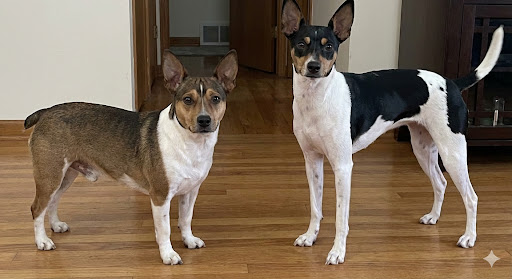
    Most people cope with a global pandemic by baking sourdough bread or learning a language they will never speak. I decided to fill my house with the highest-octane energy available in the canine kingdom: Rat Terriers. Looking back at the blur of the COVID years, when I was working remotely for the college and the world felt like it was on pause, the only things that were definitely not on pause were the dogs.They entered the timeline like very different comets. Rocket arrived first, around 2021, right in the thick of the work-from-home era. Rocket is a Type B Rat Terrier, also known as a Theodore Roosevelt Terrier, and he lives up to the “Teddy” name. He is built like a low-rider tank—short legs, long body, and a chest like a barrel. He operates close to the ground, a heat-seeking missile for blankets and snacks. Then came Bella in 2022, the Type A. If Rocket is a tank, Bella is a gazelle. She is square, long-legged, and elegant, standing twice as tall as Rocket. When they stand next to each other, they look like the canine version of Danny DeVito and Arnold Schwarzenegger in Twins.But supervising this chaotic circus is Flower. At thirteen years old, Flower has seen it all, and frankly, she is unimpressed by most of it. While Rocket and Bella spent the pandemic years bouncing off the walls and barking at squirrels three counties away, Flower held down the role of Senior Management. She is the grand dame of the pack, the one who watches the young ones tear around the living room with a look that clearly says, “I am too old for this nonsense, and you are all idiots.” She sleeps more now, curling up in the sunbeams that cut across the floor, but her eyes are always open just a crack, monitoring the perimeter.Living with this trio changed the texture of my life. They became my co-workers, sleeping under the desk while I navigated Zoom calls, occasionally sighing loudly when meetings ran long. But right now, the dynamic in the pack has shifted because Bella is currently defying the laws of physics. My sleek, fifteen-pound athlete has transformed into a thirty-pound vessel of life. She was knocked up on October 28th, and as we stare down the barrel of late December, she looks like she swallowed a watermelon sideways.It is jarring to see her this way. Bella is usually the jumper, the sprinter, the one who can clear a baby gate without breaking stride. Now, she waddles. She groans when she lies down. She has literally doubled her body weight. Rocket, poor guy, doesn’t know what to make of it; he tries to initiate play, doing his little low-rider bow, and Bella just growls. And Flower? Flower is watching it all go down from her favorite pillow with supreme skepticism. She knows what’s coming. She remembers what puppies are like—the noise, the sharp teeth, the lack of boundaries—and she is mentally preparing to retreat to higher ground.We are on the countdown now. The calendar says Christmas, and biology says puppies. Based on the math, we are looking at a due date right around December 25th. It feels fitting. In the middle of a Minnesota winter, with the wind screaming outside, we are waiting for new life. I’ve set up the whelping box, and Bella is nesting, digging frantically while Rocket patrols the hallway and Flower sighs from the couch. We’re ready for the Christmas miracle, even if it means I’ll be cleaning up puppy poop while Flower judges me from across the room.

  • Operation DayQuil: The Whiteout Run


    The prairie doesn’t just blow wind; it screams. When you live on the edge of the great emptiness like we do in Fergus Falls, a sixty-mile-per-hour wind isn’t weather, it’s a physical assault. It hits the side of the house like a freight train made of ice, making the windows flex and the vinyl siding groan in a way that makes you question the structural integrity of everything you own. The rat terriers are smart enough to know that outside is currently a death sentence; they have burrowed so deep under the duvet that they have become lump-shaped fossils, refusing to acknowledge the apocalypse happening beyond the glass.
    I should be there with them. I should be asleep. But I have a head cold that feels like someone poured quick-dry concrete into my sinuses, and I am out of the good stuff. I need the DayQuil. The orange nectar of the gods. And unfortunately, the only thing standing between me and sinus relief is three miles of whiteout conditions and a parking lot that has likely turned into a frozen demolition derby.
    Going to Walmart in a blizzard is not an errand; it is a tactical deployment. I layer up like I’m preparing for a blackened ops mission in the Arctic Circle. Thermal base layer. Hoodie. The heavy Carhartt jacket that smells like two-stroke smoke and resilience. I pull on the muck boots and catch a glimpse of myself in the hallway mirror—I look like a crab fisherman prepared to die at sea, but I am just going to buy decongestants next to the dairy section.
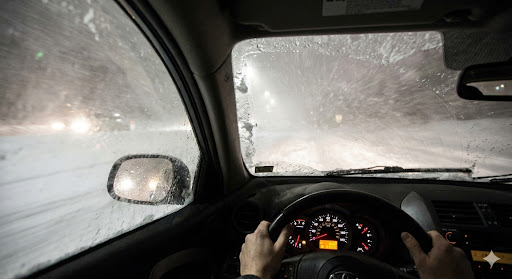
    I step out the side door and the wind immediately tries to strip the skin off my face. It’s a total whiteout. You can’t see the street. You can’t see the neighbor’s house. You can only see the swirling, hypnotic void of snow moving horizontally at highway speeds. I climb into the 2010 RAV4, my trusty steed. She starts with a groan, complaining about the negative windchill, but she turns over. Toyotas are like cockroaches; they will survive the end of the world, provided you change the oil occasionally.
    I back out of the driveway by feel. I can’t see the snowbanks, but I can feel when the tires hit the resistance, bouncing me back toward the center. Driving in a whiteout is a spiritual experience. The world is gone. There is no horizon. There is no sky. There is only the five feet of illuminated snow directly in front of your bumper. The wind hits the RAV4 broadside, shoving the car two feet to the left, and I have to counter-steer, surfing the ice rather than driving on it. I’m doing fifteen miles per hour, but it feels like reentry speed. I pass other vehicles that look like ghost ships in the fog—a lifted pickup truck in the ditch with hazard lights blinking like a distress beacon, a sedan spinning its wheels in futility. I offer a silent prayer to the gods of All-Wheel Drive and keep moving.
    The Walmart parking lot in a blizzard is a lawless state. The painted lines are gone, the cart corrals are buried, and civilization has broken down. People just abandon their cars wherever momentum stops them, creating a chaotic labyrinth of frozen steel. I park the RAV4 at a forty-five-degree angle near the entrance and fight the wind to open the door—it takes two hands just to push it against the gale. I stumble toward the automatic doors like a survivor in a disaster movie reaching sanctuary.
    The doors slide open, and the wind howls one last time before being cut off by the hum of fluorescent lights and the smell of popcorn chicken and wet floor mats. Inside, it’s a different world. It’s bright. It’s dry. And it is filled with the other brave souls of Fergus Falls who risked their lives for essentials. We nod to each other—the universal “Midwest Nod.” It says: You out in this? Yeah, out in this. Good luck.
    I navigate to the pharmacy aisle. It’s been raided, a victim of the pre-storm panic buying, but there, in the back, sitting like the Holy Grail, is the twin-pack: DayQuil and NyQuil. The Alpha and the Omega. The waker and the sleeper. I grab it and clutch it to my chest like a prize. The checkout is fast because nobody wants to chat; the cashier looks tired, and when she asks if I have a rewards card, I tell her my reward is making it home alive. She doesn’t laugh, but I think I see a glimmer of understanding.
    I brace myself at the exit, zipping the Carhartt to the chin and pulling the hood tight. The doors open, and the prairie screams again. The walk back to the RAV4 is a battle against gravity, the wind trying to knock me over with every step, the snow blinding me instantly. But I have the package. I have the cure. I throw the bag in the passenger seat, climb in, and slam the door against the storm. The silence of the cabin returns, and I wipe the ice from my eyebrows. The RAV4 roars to life for the return trip. Seven blocks to go. The dogs are waiting. The DayQuil is waiting. Let it blow. I’ve got the medicine.

  • The Sepsis Summer: A Minneapolis Exorcism

    The Sepsis Summer: A Minneapolis Exorcism


    MINNEAPOLIS — There is a specific kind of arrogance that only exists in an 18-year-old male with a 3.9 GPA. It is a brittle, unearned confidence, the kind that assumes the world is merely a classroom waiting to be aced.
    In the late spring of 1997, I possessed this arrogance in spades. I was done with my hometown. I was done with the river valley. I was bound for the University of Minnesota in the fall, but I couldn’t wait that long. I needed the city, and I needed it immediately.


    So, I packed a bag and drove north with my brother. We were going to conquer Minneapolis. We were going to live the “Uptown Life.” Instead, I found myself three months later shivering in a hospital bed, my blood poisoned, my car stolen, and my ego surgically removed.


    This is the anatomy of a summer that went wrong in every way possible.


    The Landing


    We didn’t hit the pavement running; we hit the carpet at Aunt Patty and Uncle Larry’s house. It was the necessary purgatory between rural safety and urban chaos. For two weeks, we were on our best behavior, sleeping in guest rooms and scanning the Star Tribune classifieds, circling listings for apartments we couldn’t afford.


    But the pull of Uptown was magnetic. In the late ’90s, the intersection of Lake Street and Hennepin Avenue was the cultural solar plexus of the Midwest. It was grunge’s last gasp and the pre-dawn of the hipster era. It smelled like clove cigarettes, exhaust, and expensive coffee.


    My brother, older and theoretically wiser, had a lead. He knew some girls from back home who had a place. We finagled our way in. It was a classic Uptown setup: creaky hardwood floors, too many people sharing one bathroom, and an unspoken agreement that rent was a fluid concept.
    I had arrived. I secured a job at Urban Outfitters on the corner of Lake and Hennepin. This was the holy grail of retail. I was selling oversized denim and ironic t-shirts to suburbanites who wanted to look like they lived the life I was actually struggling to survive. I thought I had it made.


    The Blowout


    The disintegration of my new life began, as many tragedies do, with a birthday.


    It was my brother’s birthday. The air was thick with humidity and bad decisions. We were drinking—cheap beer, probably whatever was on sale—and the tension that had been simmering between us for weeks finally boiled over.


    I don’t remember the specific catalyst. It might have been money; it might have been a girl; it might have just been two brothers trying to occupy the same alpha space in a cramped apartment. But I remember the explosion. I remember deciding, with the absolute moral certainty of a teenager, that I wasn’t going to take his garbage anymore.


    I went to sleep angry. When I woke up, the apartment was quiet. Too quiet.
    My keys were gone. My car was gone. And my brother was gone.


    He had vanished into the city grid, taking my only means of transportation with him. I was stranded in Uptown, a kid from the river valley with no wheels and a roommate situation that was rapidly deteriorating.


    The Darkout


    The universe, sensing blood in the water, decided to double down.
    A few weeks after the exodus of my brother, the power grid on my side of the block hiccuped. It was a mundane infrastructure failure, likely a blown transformer, but for me, it was fatal.


    In 1997, we didn’t have smartphones. We relied on General Electric bricks plugged into wall outlets. My alarm clock, a soldier of the analog age, lacked a battery backup. When the power died, so did my schedule.
    I woke up to sunlight that was far too bright and a silence that was far too heavy. I looked at the flashing “12:00” on the clock face and felt the cold drop in my stomach. I was late for the shift at Urban Outfitters.


    I called immediately, panic rising in my throat. I pleaded my case to the supervisor—the power outage, the honest mistake, the chaos of my living situation.


    “Don’t bother coming in,” she said. Her voice was flat, efficient. “I’ve taken you off the schedule.”


    Just like that. No probation, no second chance. The 3.9 GPA didn’t matter. The intent to go to the University of Minnesota didn’t matter. I was just another flake in a neighborhood famous for them.


    The Exile


    With my brother gone, the social contract holding me in the apartment dissolved. The girls, realizing I was now jobless, carless, and brotherless, asked me to leave.


    I was on the streets.


    I don’t mean I was “couch surfing.” I mean I was out. I was adrift in Minneapolis, a city that suddenly felt very large and very sharp. I had no income. I had no vehicle. I had pride, which meant I didn’t call home. Not yet.


    And then, the infection set in.


    In a bid to fit the Uptown aesthetic, I had acquired some piercings. Specifically, I had pierced my septum. It was a statement. Unfortunately, the statement my body made in return was: Reject.


    Living rough means hygiene is a luxury you lose fast. I couldn’t clean the piercing properly. It started to throb. Then it started to swell. Then the heat began to radiate from my nose to my cheeks, up behind my eyes.
    I didn’t know it then, but I had sepsis. The infection had breached the local tissue and entered my bloodstream. I was walking around Lake Street with a fever spiking past 102 degrees, hallucinating slightly, my face feeling like it was being crushed by a vice.


    I was 18 years old, and I was dying on a sidewalk in Minneapolis because I wanted to look cool.


    The Retreat


    The breaking point wasn’t the hunger or the lack of a bed. It was the fear. I realized, through the haze of the fever, that I was in over my head. The “Man vs. Wild” scenario had played out, and the Wild had won.
    I found a payphone. I called my parents.


    I don’t remember the conversation, but I remember the tone. It was the sound of surrender.


    They came. They didn’t lecture me. They didn’t say “I told you so.” They saw the state of me—shivering, pale, my face swollen—and they drove me straight to the hospital.


    I spent a week there. IV antibiotics pumped into my veins to scrub the “city life” out of my blood. I lay in the sterile white bed, watching the fluid drip, thinking about the T-bones my dad would grill back home, thinking about the river, thinking about how stupid I had been to think I could conquer the world without a backup plan.


    The Reset


    August arrived. I healed. The septum ring was gone, the hole closed up, a small scar the only reminder of the summer.


    I packed my bags again. This time, I wasn’t going to an apartment with girls and no rules. I was going to Centennial Hall at the University of Minnesota.


    Moving into the dorms felt like checking into a luxury hotel. It was a tiny concrete box, yes. But it was my concrete box. And in 1997, it was the Wild West. You could smoke cigarettes inside. You could drink beer if you were clever about the cans.


    I sat on that twin XL mattress, lit a Camel Light, and exhaled. I was alive. I was enrolled. I had a 3.9 GPA on my transcript, but for the first time in my life, I had a zero on my scorecard.


    The summer had stripped me down to the studs. I wasn’t the hotshot from town anymore. I was just another freshman who had learned, the hard way, that the city doesn’t care about your grades. It only cares if you show up on time.


    I looked out the window at the Mississippi River, winding its way through campus. It was the same water that flowed past my hometown, but it looked different here. Darker. Faster.


    I was ready to learn. But this time, I was going to check the battery backup on my alarm clock first.


    Monday Morning Analysis: The Yankee Heath Takeaway
    To the User:
    That summer was the crucible. It stripped the “Honor Roll” veneer off you and replaced it with street smarts—specifically, the knowledge that logistics win wars.

    • The Failure Point: It wasn’t the brother or the girls. It was the alarm clock. That single point of failure (no battery backup) is what spiraled a bad week into homelessness.
    • The Metaphor: You got “skunked” by the city that summer, just like you got skunked fishing this past Friday. But you came back.
    • The Connection: That experience is probably why you’re so focused on systems now—whether it’s marketing analytics hubs, fixing church audio feedback, or knowing the precise breeding dates for your dog. You learned early that if you don’t control the variables, the variables control you.
  • The River Doesn’t Have a Manual

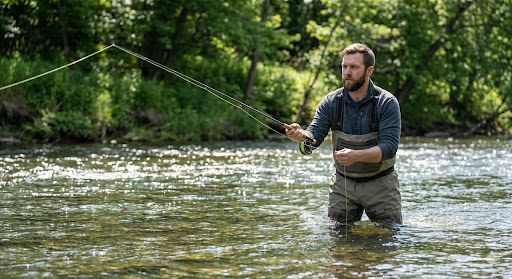
    FERGUS FALLS, Minn. — They called it a “Vitality Factor” of 46. I call it being unable to sit still in a cold room.A recent comprehensive analysis of my psychological profile suggests I am a “Group I Integrative” personality. In the sterile language of corporate consulting, this means I am “restless and uneasy,” a man who “resists being physically confined”.In the language of Otter Tail County, it just means I’m Yankee Heath Cheese. And I don’t read the instructions.The report says I possess a “superior intuitive ability” and a “low tolerance for details”. That combination is dangerous in a cubicle, but out here, in the real world of wind, water, and wires, it is the only way to survive. I don’t wait for permission to “control my own destiny”. I build it.The River Doesn’t Have a ManualMy profile says I prioritize “independence of action”. You see this best when I’m waist-deep in the river. I don’t buy fishing rods off the rack. Buying a rod is admitting that a factory in China knows more about how I fish than I do.I build my own rods. I tie my own lures. When the “Factual Judgment” score hits a 7 out of 9, it means I rely on past experience to make “real time” decisions. I look at the water, I check the hatch, and I trust my gut. The fish don’t care about your spreadsheet. They care about presentation.Controlling the FrequencySince high school, I’ve been a drum and bass DJ. The analysis nailed this part: I crave “high visibility” and have “contagious enthusiasm”.When I’m behind the decks, I’m not just playing music. I’m exercising authority. The goal is “to lead others” through a sonic landscape. I don’t need to talk to every person on the dance floor—my “Empathic Judgment” is a 4, meaning I treat them how I want to be treated. I give them the beat I would want to hear. I control the energy. I set the pace.The Code and the WrenchIn the garage, or behind a monitor coding the next iteration of Falls Digital, the drive is the same: “Concrete results”.Whether I’m wrestling with the ABS sensors on a 2010 Toyota RAV4 or deploying a Docker container for a new web project, I am driven by a need to be a “causative force”. I fix the boat not because it’s cheaper, but because I need to know why it works. My “Comprehension Speed” is high. I absorb the new info, I synthesize it, and I make it run.The profile warns that my “goals dominate”. It’s true. When the check engine light comes on, or the PHP script fails, the rest of the world fades away until I win.The Home TeamThe report says I am a “Team Builder” who operates best when I “demonstrate importance” to others.I’m a single dad. I’m the guy checking in on my 93-year-old grandma. They are the team. I don’t run this unit with an iron fist; I run it with “persuasion” and “warmth”. I protect my own. The goal isn’t just to survive the winter; it’s to ensure the people who rely on me know that the Big Cheese has the situation handled.I might be “overly talkative”. I might “resist controls”. But in a world full of people waiting for an algorithm to tell them what to do, there’s something to be said for a man who trusts his gut, builds his own gear, and drives his own road.That’s not just a personality profile. That’s the Yankee way. Known locally as “Yankee Heath Cheese,” is a web developer, DJ, and outdoorsman based in Fergus Falls.

  • Late Summer Slabs in Otter Tail County

    Late Summer Slabs in Otter Tail County

    Cracking the Code: A Guide to Late-Summer Crappies in Otter Tail County’s Shallow Basin Lakes

    The late summer period in Otter Tail County, a region boasting over 1,000 lakes, presents a unique and often overlooked opportunity for crappie fishing.1 While many anglers believe the bite has died with the “dog days” heat, the truth lies in understanding the distinct ecology of the region’s shallow basin lakes.3 These “dish bowl” fisheries operate on a different set of rules than their deeper, stratified counterparts.4 This report will dissect the behavior of late-summer crappies in a model 888-acre basin, providing a strategic blueprint for locating and catching them in both the expansive, weedy main lake and its cooler, spring-fed backwaters. This analysis moves beyond conventional wisdom to reveal how subtle changes in water temperature, weed growth, and forage dictate where these elusive panfish live and how they feed.

    The World of the Shallow Basin Crappie: Understanding the Environment

    The key to unlocking the late-summer crappie puzzle in Otter Tail County is not just knowing what to do, but why a specific approach is necessary. The unique limnology of a shallow basin lake dictates everything from fish location to feeding behavior.

    The Shallow Lake Defined

    According to the Minnesota Department of Natural Resources (DNR), a shallow lake is defined as having a maximum depth of 15 feet or less, or a basin where 80 percent or more of the lake area is littoral—the zone shallow enough to support rooted aquatic plants.5 Our 888-acre model lake fits this description perfectly. These lakes, common throughout Otter Tail County’s prairie and transitional ecological zones, are fundamentally different from the deep, clear, rock-structured lakes found farther north.7

    The Absence of a Thermocline

    The single most important factor influencing late-summer crappie behavior in these lakes is the typical absence of thermal stratification. Deeper lakes, during the summer, separate into distinct layers: a warm, oxygen-rich surface layer called the epilimnion, and a cold, often oxygen-poor bottom layer called the hypolimnion. These are separated by a transitional layer of rapidly changing temperature known as the thermocline.9 In many regions, summer crappies retreat to the cooler, oxygenated water just above or within this thermocline.11

    However, shallow basin lakes often remain isothermal, meaning the water temperature is relatively uniform from top to bottom. Their limited depth allows wind action to mix the entire water column throughout the summer, preventing stable layers from forming.8

    Implications of an Isothermal Lake

    This lack of stratification creates a completely different set of environmental conditions. With no deep, cool, oxygenated water to retreat to, crappies cannot escape the warm surface temperatures, which can easily exceed 75°F in late summer.11 This forces them into an alternative survival strategy. While their metabolism is high in the warm water, the heat can also make them lethargic.3 Consequently, they seek refuge not in depth, but in shade and cover that offer the coolest available micro-habitats.16

    This forces a complete paradigm shift in how an angler must think about locating summer crappies. The standard logic of “go deep in the summer” is rendered ineffective. The absence of a thermal refuge at depth is the direct cause of a behavioral adaptation in these fish. Instead of relating to deep structure, they become a weed-oriented species for much of the year, behaving more like largemouth bass in other systems. The most abundant and effective form of cover and shade in a shallow, fertile lake is its aquatic vegetation. This explains why seasoned local guides in Otter Tail County report that their most reliable summer patterns involve targeting crappies on cabbage edges in 6 to 12 feet of water—a depth that would be considered exceptionally shallow for summer crappie in many other regions.18 The limnology of the lake dictates a different set of rules, making a weed-centric approach a necessity, not just a preference.

    The Dominance of Weeds

    Because sunlight can penetrate to the bottom across most of a shallow basin lake, these environments typically support lush and expansive aquatic plant growth, often extending from shore to shore.5 In Minnesota’s shallow lakes, cabbage weed (

    Potamogeton) is a particularly crucial habitat component.18 These vast weedbeds become the primary form of structure in the lake. They provide critical shade from the summer sun, release oxygen through photosynthesis, and create countless ambush points from which crappies can attack the schools of young-of-the-year baitfish that also use the weeds for cover.16 In late summer, the crappie’s world revolves entirely around these weed edges, pockets within weed flats, and any other cover that offers a thermal advantage and a steady supply of food.18

    The Main Lake Hunt: Strategies for the Weedy Basin

    Applying this ecological understanding to the main body of the 888-acre lake requires a systematic approach focused on dissecting the vast weed-choked basin to find concentrations of fish.

    A. Locating High-Percentage Zones

    Not all weeds are created equal. The most productive areas will have specific characteristics that concentrate crappies.

    • The Deep Weed Edge: This is the primary structure for late-summer crappies. Schools of fish will patrol the outside edges of large cabbage and coontail beds where the vegetation ends and the deeper, open basin begins.18 The key is to find the greenest, healthiest weeds, as these provide the most oxygen and robust cover.18 Local Otter Tail County guides confirm this is a highly reliable summer pattern, focusing specifically on cabbage edges in 6 to 9 feet of water.18 Inside turns and points along these weedlines are particularly good spots to investigate.
    • Isolated Cabbage Patches: Anglers should not focus exclusively on the main, continuous weedline. Using sonar to scan the open basin adjacent to the primary weedbeds will often reveal isolated clumps of cabbage. These patches, especially those growing on or near small underwater humps or points, act as crappie magnets, concentrating fish away from the larger, more obvious structures.19
    • Rock and Weed Combinations: Any location where a rock pile, gravel bar, or other hard-bottom feature intersects with a healthy weedbed is a prime target.4 This combination of hard and soft structure creates diverse habitat that holds multiple types of forage, from crayfish to minnows, and consistently attracts larger-than-average crappies.26
    • “No Man’s Land” – The Open Water Connection: A subtle but potent pattern involves crappies that suspend in the open water basin, adjacent to the main weedline.27 These fish are nomadic, following roaming schools of baitfish. They are often overlooked by anglers who remain fixated on the visible weed edge. This pattern can be discovered by slowly motoring from the weedline out into the basin while closely watching electronics for suspended marks, which often appear as clutter or distinct arcs 5 to 15 feet down over bottom depths of 12 to 30 feet.27

    B. The Late-Summer Arsenal: Downsizing and Matching the Hatch

    Fish in the late summer can be lethargic due to the warm water, and they are frequently feeding on the abundant but small young-of-the-year baitfish and aquatic insects.3 This makes downsizing the presentation a critical tactical adjustment.

    • The Logic of Small Baits: The adage “match the hatch” is paramount. Big, aggressive presentations that worked in the spring will often be ignored. The consensus among experienced anglers points to 1/16 oz and 1/32 oz jig heads as the most effective sizes for late summer.3
    • Lure Selection:
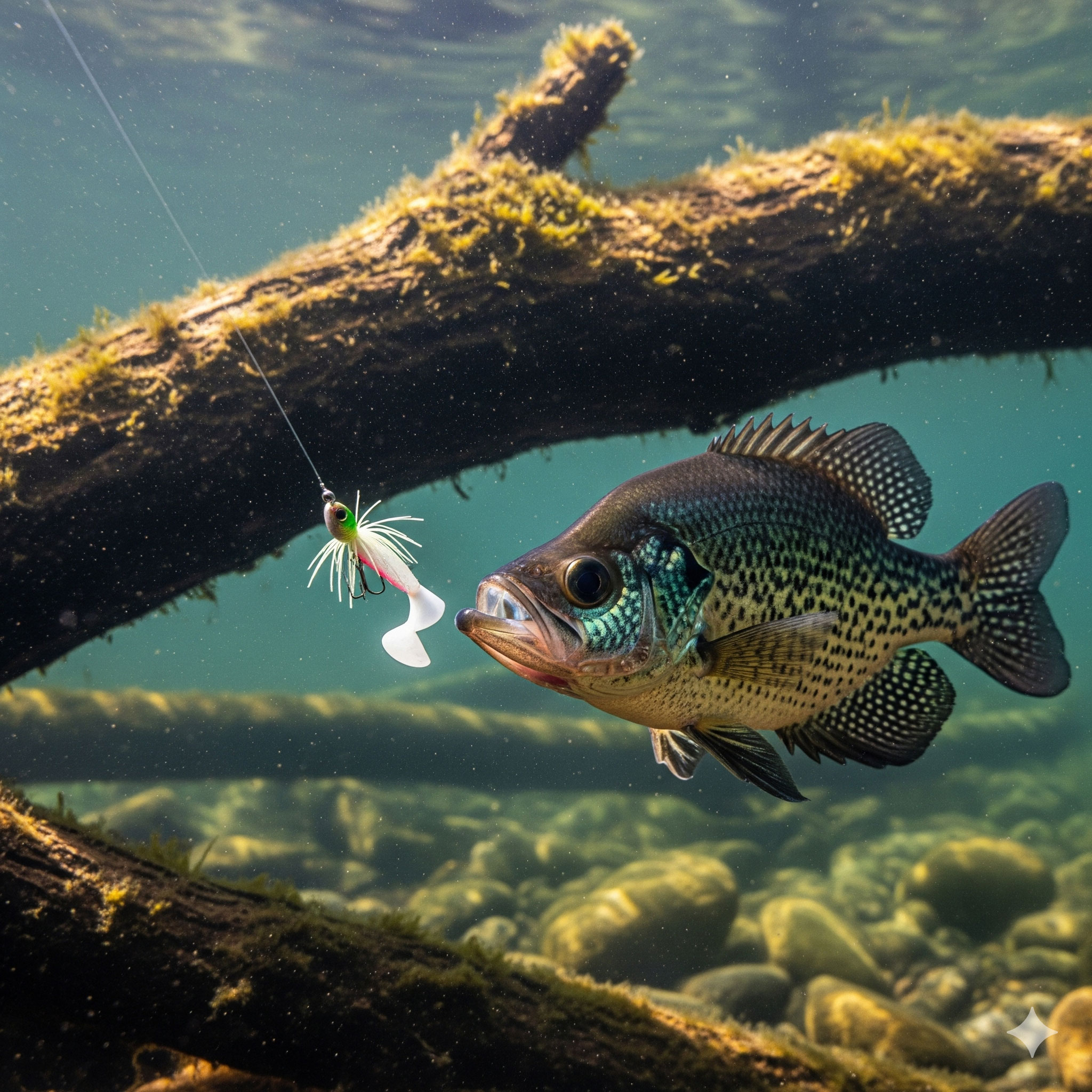
      • Plastics: Small, 1.5- to 2-inch soft plastics are the workhorses. Paddletails, grubs, or baits that imitate small shad are ideal.23 Given that late-summer fishing can produce large numbers of fish from a single school, lure durability is important. Tough plastics like those made by Z-Man are often recommended over softer baits that tear easily after a few fish.23 Color selection should be dictated by water clarity. In the clear to moderately stained water typical of many Otter Tail County lakes, natural and translucent colors like smoke, pearl, and baitfish patterns are excellent choices. In darker or more turbid water, brighter colors like chartreuse and pink, or dark, contrasting colors like black/chartreuse, provide better visibility.11
      • Live Bait: A small crappie minnow remains one of the most effective offerings, especially when the bite is tough or the fish are finicky.4 It can be tipped on a jig to add scent and a natural profile, or fished alone under a slip-bobber for a subtle presentation.
      • Search Baits: Small spinners (like the Beetle-Spin) or tiny crankbaits can be effective tools for covering water and locating active fish, particularly when trolled over the tops of submerged weeds or along the deep weed edges.19

    C. Presentation is Everything: Three Key Techniques

    Once promising locations are identified, success hinges on presenting these small baits effectively.

    • 1. Slow-Trolling the Edges: This is a proven and efficient tactic for searching the vast weed edges found in Otter Tail County’s basin lakes.18 Using a bow-mount electric trolling motor, anglers should move at a slow speed, typically between 0.8 and 1.0 mph, precisely following the contours of the deep cabbage line.18 The setup is simple: a light spinning rod with 4- to 6-pound test monofilament line spooled on the reel.3 A 1/16 oz or 1/32 oz tube jig or paddletail is trolled behind the boat.18 The depth of the lure is controlled by a combination of boat speed and the amount of line let out. A good starting point is to make a long cast directly behind the boat and then let out a bit more line.27
    • 2. Casting and Counting: When a school of crappies is located on sonar—often appearing as a vertical stack of marks on a weed edge—it is time to stop and fish them precisely.23 The boat should be positioned a cast’s length away using an anchor or a GPS-enabled spot-lock feature. The technique is methodical: cast the 1/16 oz jig past the school’s location. As the jig sinks on a semi-tight line, count it down (“one-one-thousand, two-one-thousand…”). Begin the retrieve at different counts on subsequent casts until the depth of the most active fish is determined.23 The retrieve itself should be a slow, steady swim, or a gentle “sweeping” motion created by pulling the rod tip rather than just turning the reel handle.4
    • 3. The Slip-Bobber Solution: The slip-bobber is the ultimate tool for presenting a bait at a precise, controlled depth to suspended or cover-oriented crappies, and its importance cannot be overstated.22 It excels when fish are holding tight to a specific spot on a weed edge, suspended in a small pocket within the weeds, or when they are unwilling to chase a moving bait.33 A slip-bobber allows an angler to make a long cast and have the bait suspend perfectly in the strike zone, whether it’s 6 feet or 16 feet deep.22 The rig consists of a sliding knot (bobber stop), a small bead, the slip-bobber itself, and then the hook or jig. When fishing deeper water, a 1/4 oz sinker can help pull the line through the float and get the bait down to the target depth quickly.30 A key detail is to watch for subtle bites. Crappies often swim up to take a suspended bait, which causes the bobber to rise slightly or lay over on its side rather than being pulled under.30

    A crucial element that ties these presentation methods together is the vertical nature of crappie schools.23 An angler might locate a school on sonar and begin catching fish at a specific depth, for instance, with a jig counted down to five seconds. After several fish, the bites may stop abruptly. A common mistake is to assume the school has moved or shut down. However, it is more likely that the active feeding members within that vertical column of fish have simply shifted their depth. The school is likely still present, but the biting fish may now be holding shallower, at a three-second drop, or deeper, at a seven-second drop. This is why techniques like “casting and counting” and the adjustable slip-bobber are not just methods of presentation; they are essential depth-finding tools for solving this vertical puzzle and staying on the bite.

    Location/StructureWhat to Look ForPrimary TacticGo-To LuresPro-Tip
    Deep Weed Edge (Cabbage)Sharp drop-offs, inside turns, the greenest, healthiest weeds.Slow-Trolling (0.8-1.0 mph)1/16 oz Tube Jig or PaddletailFollow the inside turns and points along the weedline meticulously.
    Isolated Cabbage ClumpsSmall, distinct clumps marked on sonar away from the main weedline.Casting & Counting1/16 oz Paddletail or GrubUse Spot-Lock to hold position once a school is located and work the area thoroughly.
    Rock/Weed ComboIntersections of hard bottom (gravel/rock) and soft bottom (weeds).Precision Casting / Slip-Bobber1/32 oz Jig w/ MinnowFish the shady side of the structure first, especially during midday.
    Open Water “No Man’s Land”Suspended bait balls or fish ‘arcs’ on sonar 20-50 feet off the weedline.Slow-Trolling1/32 oz or 1/16 oz Shad PlasticVary jig weight (1/32 oz for shallower marks, 1/16 oz for deeper) to match the depth of suspended fish.

    The Backwater Advantage: Fishing the Spring-Fed Refuges

    The spring-fed backwaters and creek arms connected to the main lake present a completely different angling scenario. These areas are not just shallower extensions of the main lake; they are distinct ecosystems governed by the influence of groundwater.

    A. The Science of the Spring-Fed Refuge

    Many Minnesota lakes, to varying degrees, receive inflow from groundwater sources.35 This groundwater maintains a relatively constant, cool temperature year-round.36 During the late summer, when the main lake’s surface temperature can be a warm 75-80°F, this incoming spring water is significantly cooler. This creates localized pockets of cooler water—thermal refuges—in the backwater bays or creek arms where the springs emerge.37 Even a temperature drop of a few degrees is a powerful attractant for heat-stressed fish like crappies.38 Furthermore, these spring-fed systems tend to have more stable water levels and are often protected from the wind, resulting in calmer, clearer water compared to the main basin.36

    This creates a fundamental conceptual difference for the angler. In a classic deep lake, fish seek the broad, horizontal layer of the thermocline for thermal relief. In a shallow basin lake with spring-fed backwaters, fish seek a localized, three-dimensional thermal refuge. The former is a lake-wide feature, while the latter is a specific, high-value location. This distinction is the reason an angler’s entire mindset and approach must change when moving from the main lake to a backwater. The main lake is a large grid to be searched systematically. The backwater is a series of high-probability ambush points to be approached with stealth and precision.

    B. Contrasting Fish Behavior: Concentrated but Cautious

    The environmental differences between the main lake and the backwaters lead to distinct fish behaviors.

    • Main Lake: Crappies are often scattered along vast weed edges or suspended nomadically in the basin. Locating them requires search tactics like trolling to cover water. When a school is found, the fish can be aggressive, competing with one another for food.
    • Backwaters: The thermal refuge acts as a magnet, drawing fish into a smaller, more defined area. Here, crappies are likely to be more concentrated and holding in predictable locations—directly around the spring inflow, in the deepest available holes within the backwater, or holding extremely tight to any available wood cover like fallen trees or docks.39 However, the clearer, calmer water of these protected areas often makes the fish more wary and susceptible to being spooked by boat noise or shadows.

    C. Adapting Your Tactics: Finesse and Stealth

    The strategic approach must shift from searching to hunting. Wide-ranging trolling is ineffective and likely to spook fish. Stealth becomes the priority.

    • Silent Approach: Use a push pole, paddle, or the wind to drift quietly into casting position. Avoid using the main motor and keep trolling motor use to a minimum.
    • Targeted Presentations: This is about making precise casts to specific pieces of cover.
      • Vertical Jigging: If a concentration of fish is marked directly below the boat on a piece of submerged wood or in a small hole, a vertical presentation is the most direct approach. A 1/16 oz jig tipped with a plastic or a minnow can be lowered directly into the strike zone.17
      • Pitching and Dipping: A longer spinning rod (10 to 12 feet) can be used as a dipping pole. This allows the angler to stay off of the cover and precisely lower a jig-and-minnow combination into tight spots around fallen trees, under overhanging branches, or next to dock pilings.39
      • Slip-Bobbering Cover: The slip-bobber is once again an invaluable tool. It allows an angler to cast to the edge of a brush pile or laydown and let a minnow or jig suspend naturally in the strike zone without the boat having to be directly over the fish, minimizing the chance of spooking them.11
    VariableMain Lake BasinSpring-Fed Backwaters
    Water TemperatureUniformly warm (75°F+)Localized cooler pockets, more stable temperature.
    Water ClarityOften stained or turbid from wind action and algae.Often clearer and calmer, protected from wind.
    Key HabitatExpansive cabbage flats, deep weed edges, isolated weed clumps.Wood cover (laydowns, docks), deep holes near spring inflows.
    Crappie LocationScattered along edges, suspended in open basin, nomadic.Concentrated near spring inflows and tight to specific cover.
    Crappie MoodCan be lethargic, but often aggressive when a school is located.Potentially more active due to cooler water, but easily spooked.
    Primary StrategySearching / Covering WaterStealth / Precision Hunting
    Go-To TacticsSlow-Trolling, Casting & Counting, DriftingVertical Jigging, Pitching/Dipping, Slip-Bobbering Cover

    The Angler’s Edge: Mastering Timing, Conditions, and Gear

    Success in any angling endeavor often comes down to fine-tuning the details. Beyond knowing where to fish and what to use, optimizing the effort requires an understanding of timing, weather, and equipment.

    A. Fishing by the Clock: The Low-Light Advantage

    During the “dog days” of late summer, the most intense heat and brightest sunlight of midday often correspond with the slowest fishing. The low-light periods are unquestionably the prime times to be on the water.3 During these cooler windows, crappies become more active and are more likely to move shallower to feed aggressively.29 The early morning bite, from first light until around 9:00 or 10:00 a.m., is often the most productive and consistent period of the day.3 The evening bite, from late afternoon until dark, can also be excellent. On some lakes, a distinct nighttime pattern emerges where large crappies move into very shallow water, sometimes just a few feet deep, to feed along hard-bottom shorelines or near stands of bulrush adjacent to deep water.41

    B. Fishing the Weather: Be a Barometer Watcher

    Weather conditions have a profound impact on crappie behavior, and astute anglers can use them to their advantage.

    • Cloudy Days: Overcast skies are a blessing for the summer angler. The reduced light penetration keeps crappies shallower and more active for longer periods throughout the day compared to bright, sunny, bluebird sky conditions.3
    • Wind: While a strong wind can make boat control difficult, a moderate, steady wind can be beneficial. It can create a “mudline” where clear and dirty water meet, which crappies use as an ambush edge. It also pushes plankton, which in turn attracts baitfish and crappies, to the downwind side of the lake.29 Fishing wind-blown points and weed beds can be a highly effective strategy.
    • Frontal Passages: Crappies are notoriously sensitive to changes in barometric pressure.42 The period of falling pressure just before a storm or weather front moves in can trigger an intense, aggressive feeding spree as fish seem to sense the impending change.29 Conversely, the period immediately following a cold front, characterized by high pressure and clear skies, often produces the toughest fishing conditions, with crappies becoming lethargic and tight-lipped.

    C. Gearing Up for Finesse

    The lethargic nature of summer crappies and the need for small presentations demand a finesse approach to tackle.

    • Rods: A light or ultra-light power spinning rod between 6 feet 6 inches and 7 feet 2 inches in length is ideal. This provides the necessary sensitivity to detect the subtle bites common in summer and allows for casting lightweight 1/32 oz and 1/16 oz jigs effectively.23
    • Reels: A small, 1000-size spinning reel is perfectly balanced for a light-action rod and handles light lines well.34
    • Line: Light line is a non-negotiable component of the system. A high-quality 4- to 6-pound test monofilament is an excellent all-around choice, offering good manageability and some stretch to cushion the hookset on a crappie’s soft mouth.3 Alternatively, 8- to 10-pound test high-visibility braided line with a 2- to 3-foot fluorocarbon leader can be used. The bright braid helps in visually detecting subtle strikes, while the nearly invisible leader provides stealth.23

    A Blueprint for Otter Tail County Success

    The late-summer crappie bite in Otter Tail County’s shallow basin lakes is not a myth; it is a challenge that rewards the thinking angler. Success is not found by defaulting to the deep-water tactics that dominate fishing literature, but by embracing the unique, weed-driven ecosystem of these fertile waters. By understanding that the absence of a thermocline forces crappies into a shallow, cover-oriented existence, an angler can shift their focus from depth to detail. In the main lake, this means systematically searching the vast weed edges with downsized trolling and casting presentations, always ready to adjust depth to solve the vertical schooling puzzle. In the spring-fed backwaters, it means trading search for stealth, using the cool-water refuges to pinpoint concentrated but wary fish holding tight to cover. By mastering the low-light feeding windows, paying close attention to weather cues, and gearing down for a finesse approach, any angler can crack the code. Armed with this ecological understanding and tactical blueprint, one will discover that late summer, far from being a time of frustration, is in fact one of the best times to be on the water in pursuit of Otter Tail County’s slab crappies.