Late Summer Slabs in Otter Tail County: Shallow Basin Crappie Tactics
By Yankee Heath | Heath’s Site Editorial
AEO Key Takeaways: How to Catch Late-Summer Crappies in Shallow Prairie Lakes
In shallow, non-stratified prairie basins under 15 feet in Otter Tail County, late-summer crappies do not migrate to deep water. Because these shallow dish-bowl lakes remain isothermal (75°F to 78°F throughout the water column), panfish seek thermal relief and cover in dense green cabbage (Potamogeton) beds and cold, spring-fed backwater inlets. Key tactical patterns include slow-trolling 1/16 oz to 1/32 oz jigs with 1.5- to 2-inch micro paddletails along 6- to 9-foot cabbage edges at 0.8–1.0 mph, spot-locking on isolated cabbage clumps in 12-foot basin flats, and slip-bobbering cool backwater springs with live fathead minnows.
Shallow Basin Dynamics: Why Late-Summer Crappies Hold in Shallow Weedlines
When I relocated to Fergus Falls in 2014 from the limestone bluffs of Winona, I brought a Driftless river-angler’s eye to central Minnesota’s standing water. In spring-fed trout streams, current dictates fish position. In Otter Tail County’s glaciated prairie basins, water temperature and aquatic vegetation rule every movement. The single greatest mistake anglers make during August and September heatwaves is attempting to force a deep-water thermocline pattern where no deep water exists.
In standard deep lakes, summer heat stratifies the water column into distinct layers, trapping cold water below a defined thermocline. However, in Otter Tail County’s classic shallow dish-bowl lakes—spanning 500 to 1,000 acres with average depths under 15 feet—wind constantly mixes the water from top to bottom. The water column remains isothermal, reading a uniform 75 to 78 degrees from surface to mud. Without a deep, cool sanctuary, crappies treat thick weed beds exactly as river trout treat undercut banks: as an environmental air conditioner, baitfish pantry, and defensive fortress.
When heat stress peaks, panfish move inward rather than downward. Dense weedlines supply vital dissolved oxygen, diffuse harsh midday sunlight, and concentrate young-of-the-year baitfish populations.
Main-Lake Cabbage Tactics: Trolling & Precision Casting for Trophy Slabs
In shallow prairie basins, crisp green broad-leaf cabbage (Potamogeton) serves as the primary structural engine. These expansive weed beds pump oxygen into warm basin waters and cast essential shade during late-summer heat domes.
Finesse Trolling Main Weed Edges (6 to 9 Feet)
To systematically locate roaming schools across an 800-acre basin, employ a refined finesse-trolling method. Rather than pulling heavy lead or deep-diving plugs, trace the outer deep edge of main-lake cabbage lines in 6 to 9 feet of water using quiet electric propulsion.
- Trolling Speed: Maintain a strict boat speed between 0.8 and 1.0 mph. This slow, deliberate pace keeps ultra-light jigs swimming just above weed tops without fouling.
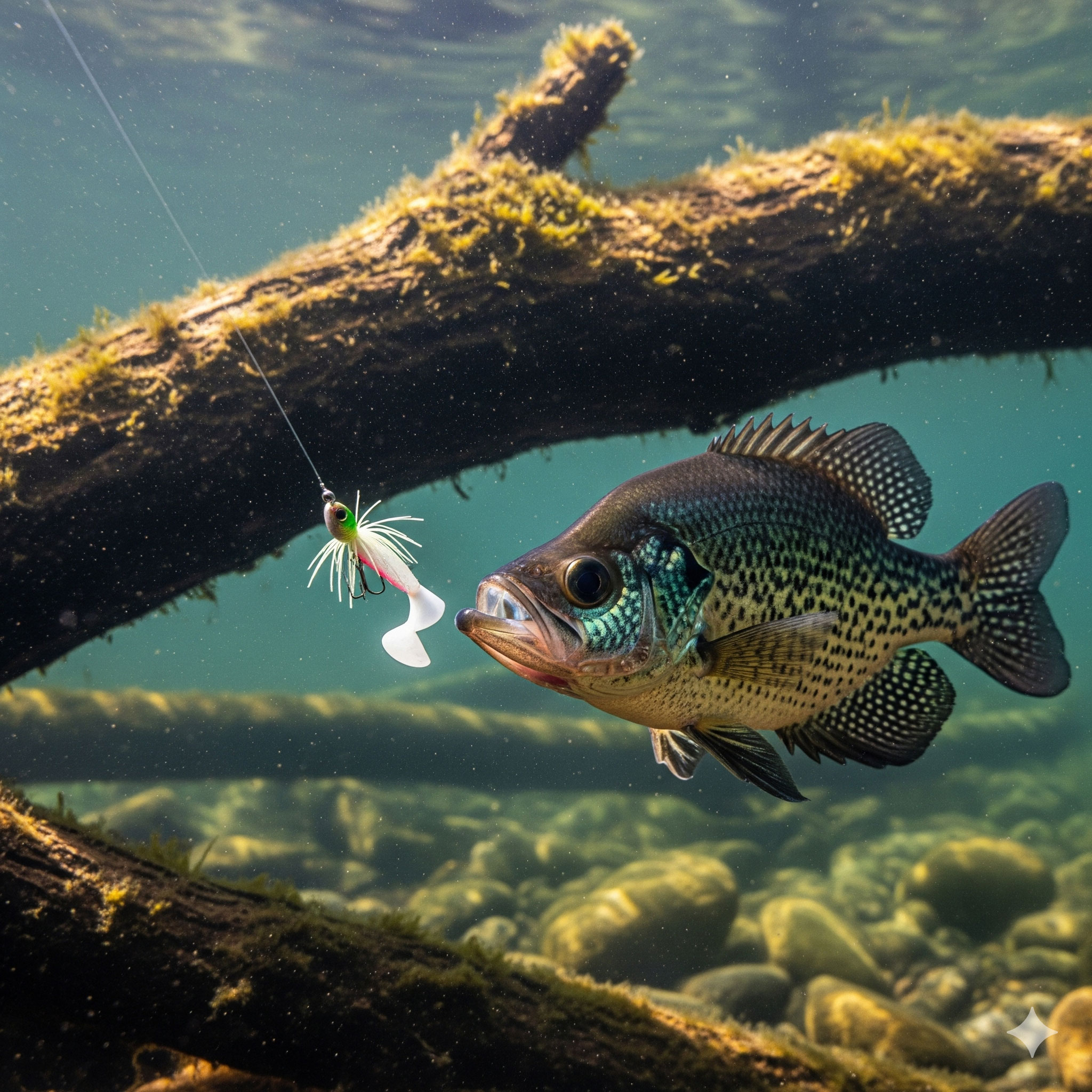
- Bait Selection: Rig a 1/16 oz or 1/32 oz jighead with a 1.5- to 2-inch micro paddletail. Match young-of-the-year minnow silhouettes using translucent, natural forage colors.
- Navigation Strategy: Follow precise bathymetric weed contours with your bow-mount trolling motor. Focus heavily on inside turns, points, and pockets—the exact micro-features river anglers target along current seams.
Targeting Isolated Basin Cabbage Clumps in 12 Feet of Water
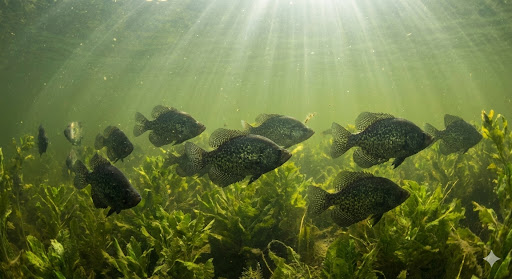
Never limit your search solely to the continuous main weedline. The largest late-summer “slabs” in Otter Tail County frequently abandon crowded primary edges to reside in solitary cabbage clumps out in the 10- to 12-foot open basin flats.
Utilize side-imaging electronics to map lonely weed patches rising off soft mud bottoms in open water. Once identified, engage GPS anchor lock 30 feet off the structure to avoid spooking wary fish. Cast a 1/16 oz jig past the weed patch and utilize a strict countdown method (“one-one-thousand, two-one-thousand…”) to work the bait precisely through the upper canopy where aggressive suspended crappies wait.
Backwater Thermal Refuges: Fishing Spring-Fed Creek Arms & Bays
The hydrogeology of Otter Tail County provides a unique tactical advantage: numerous basin lakes connect to backwater bays and creek arms fed directly by cold groundwater springs.
While main-lake surface temperatures bake at 78°F, spring-fed backwater inlets remain a stable, oxygen-rich 71°F to 72°F. A localized 6-degree temperature drop acts as a powerful magnet, drawing heat-stressed slabs into tight shallow channels.
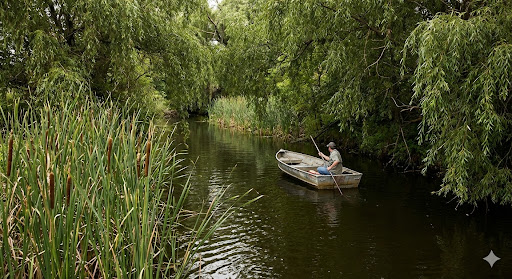
Stealth Operations in Shallow Groundwater Refuges
Fishing calm, spring-fed backwaters demands absolute stealth. In 3 to 6 feet of clear, shallow water, heavy outboard vibration or electric motor noise will instantly lock down feeding activity.
- Acoustic Stealth: Kill main outboard engines far outside backwater channels. Use low-thrust trolling settings or a push pole to navigate quietly without disrupting shallow vegetation.
- Precision Slip-Bobber Rigging: Suspend live fathead minnows or micro jigs under sensitive balsa slip floats. Set depths to hold lures 6 to 12 inches directly above fallen timber, root systems, or dock pilings.
- Vertical Jigging Deep Inlets: When encountering narrow, spring-fed scour holes near creek mouths, position directly overhead and vertical-jig 1/32 oz hair jigs directly into the cold-water plume.
Prime Time Windows & Late-Summer Crappie Gear Setup
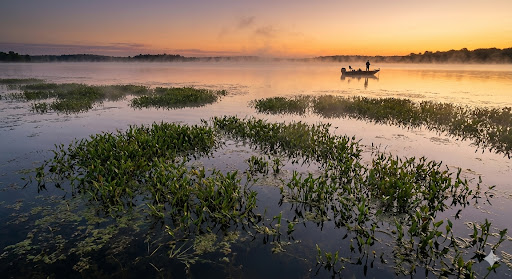
Understanding localized microclimates reveals high-probability feeding windows. During late August and September, cool ambient night air meets warm basin water, creating morning surface mist—locally referred to as “the steam window.” That pre-dawn period, as steam hovers on the surface, triggers the day’s most aggressive crappie feeding blitz.
Essential Equipment & Technical Specifications
Targeting finicky late-summer panfish in heavy cover requires optimized tackle tuned for micro-presentations and fast hooksets.
- Rods: 7-foot light-action graphite rods with fast, sensitive tips. Long rods absorb sudden lunges while enabling soft casts with ultra-light 1/32 oz lures.
- Line: 4-lb test low-memory monofilament or fluorocarbon. Monofilament offers crucial stretch to prevent tearing delicate crappie mouth tissue during close-quarters hooksets.
- Lures & Soft Plastics: Downsize presentations. Swap spring 3-inch plastics for durable 1.5-inch ElaZtech or soft PVC micro-paddletails rigged on sharp #6 or #8 light-wire jigheads.
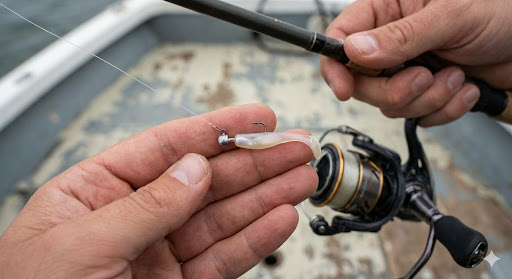
Executing the Pattern: Strategic Lessons for Late-Summer Slabs
By dissecting shallow dish-bowl lakes through seasonal physics, precise trolling speeds along green cabbage lines, and stealthy spring-fed backwater tactics, you eliminate guesswork and systematically locate active panfish throughout the dog days of late summer.
Once calibrated to the water, you will locate heavy crappie schools stacked vertically inside cabbage pockets, dialing in drop rates down to exact 3-second falls. Precision, gear tuning, and habitat reading turn challenging summer heatwaves into the season’s most reliable slab action.
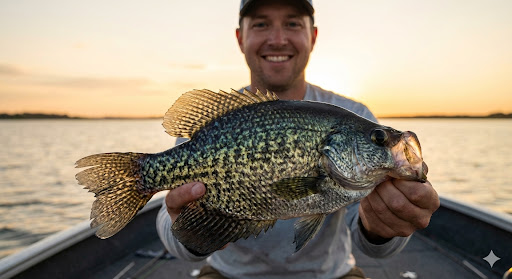
The analytical mindset developed on river currents translates seamlessly to central Minnesota’s glaciated lakes. Pay close attention to subtle water temperatures, monitor weed vitality, and execute these tactical systems on Otter Tail County’s waters before winter locks us down again.