The Long White Cloud and the Golden Ghost: A Driftless Rat’s Exile in Aotearoa
By Yankee Heath
Part I: The Fence Posts of the Soul
There are moments in your life that act like fence posts—old, creosote-soaked timbers driven so deep into the timeline they become permanent landmarks. Everything before that post is one pasture; everything after it is another.
For me, the first massive post was the day I met Kenny Salwey back in Winona. He was the “Last River Rat,” a man carved out of swamp white oak who knew the Mississippi better than most people know their own living rooms. Sitting in that classroom, I realized I didn’t want the mud of the bottoms; I wanted the clear water of the hills. I wanted to be the Driftless Rat. I wanted to know the trout streams of the Whitewater Valley the way a detective knows a crime scene.
But then life happened. I became a transplant to Fergus Falls in 2014, moving from the bluffs of Winona to the flat, wind-whipped exposure of the prairie. I traded the protective embrace of the coulees for the deep, indifferent lakes of Otter Tail County. For a decade, I’ve been in a kind of exile, honing my skills as a digital professional and a survivor, but always feeling the pull of the South.
The South Island of New Zealand was always the ultimate “myth” in my head. It was the only place on Earth that seemed to offer a version of the Driftless that was turned up to eleven. I’d seen the glossy magazine spreads for years—brown trout the size of leg bones and water so clear it looked like liquid air. I knew that if I was ever going to truly understand the “Rat” philosophy, I had to test it against the smartest fish in the world.
Part II: The Arrival and the Rig
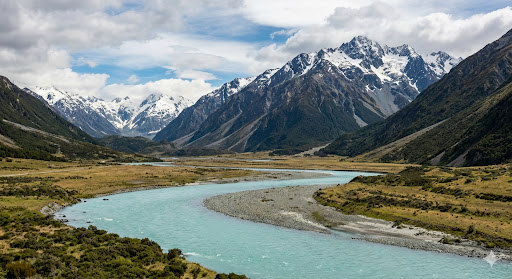
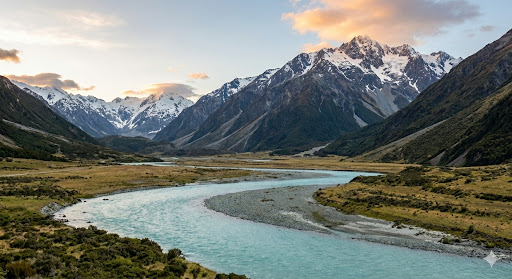
The flight into Aotearoa was a sensory haymaker. In Minnesota, we have bluffs; in New Zealand, they have jagged, snow-capped cathedrals that pierce the sky. Stepping off that plane, the air didn’t just feel cold—it felt ancient. It carried the scent of pine, damp earth, and a tectonic energy that makes a prairie blizzard feel like a light breeze.
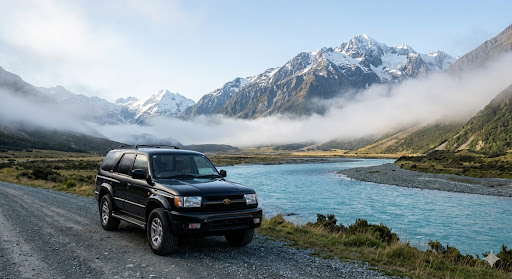
I needed a rig. I’m a Toyota guy—I’ve spent enough time researching the frame rot on 1999 Lexus RX300s and 2002 4Runners to know what a real truck looks like. I found a 3rd Gen 4Runner Limited, black with the gold badges, just like the one I’d scouted back in Alexandria. It was the perfect vessel for an exile. I loaded my gear, checked my internal compass, and headed South.
The roads don’t just run; they cling to the edges of mountains that look like they’re still growing. Every turn revealed a new vista—turquoise lakes reflecting peaks like a perfect, silent mirror. I felt a sense of power in the dirt there, a resonance that hit me right in the soul. It reminded me of why I want to move back home to the Driftless to be with my daughter; you can’t replace the feeling of being grounded in a land that speaks to you.
Part III: The Crash Course in Humility
I found a small town tucked beside a legendary river and did what I always do: I headed for the local pub. The faces there were etched with the character of the land—weather-beaten, honest, and welcoming. Over pints of local brew, the stories started flowing. Tales of legendary trout and the brutal, beautiful reality of fishing these waters. I felt an immediate connection. These were my people. Different accent, same heart.
But as soon as I waded into the water the next morning, the South Island handed me a masterclass in humility.
See, I thought I knew how to fish. I grew up in the Driftless, learning how to fish the creeks and identify every wildflower and mushroom in the woods. I thought I was the King of the Creeks. I was wrong. New Zealand trout aren’t just fish; they are The Analysts of the underwater world. They are wary, selective, and possess an uncanny ability to spot a “Yankee” mistake from fifty yards away.
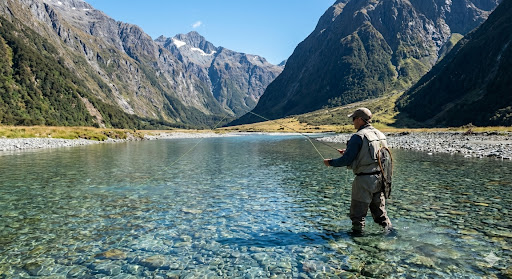
My practiced casts and my “tried and true” tactics from the Whitewater Valley were falling flat. I cycled through my entire arsenal—dry flies, nymphs, streamers—and the trout just looked at me with a profound, scaly indifference. I realized then that fly fishing isn’t just a hobby; it’s an ecosystem study. It’s about minimizing your presence until you become part of the limestone. I had to learn to move like a ghost and think like a predator.
Part IV: The “Steve” Factor and the Frustration
The frustration was real, and it was loud. There were moments where I was ready to throw my rod into the bush and walk back to Winona. The wind was a constant adversary, whipping across the water and tangling my line into knots that looked like modern art.
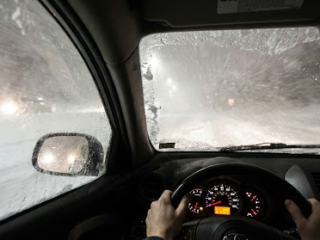
And then there was the cold. It was ten below zero some mornings. I’d see the “Steve” (steam) coming off the water and out of my own mouth, a reminder of the physics of a Minnesota winter. But unlike the steam from a tailpipe that tells you if an engine is healthy, the steam here just told me I was crazy for being waist-deep in a glacial current.
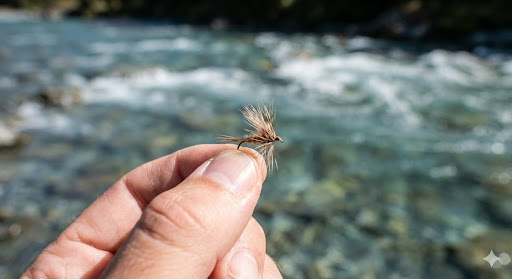
I spent hours studying tiny flies. Each one was a miniature work of art, a delicate construction of feathers and thread designed to mimic the microscopic life of the river. I realized that “survival” isn’t about fighting nature; it’s about working with it. It’s knowing which wood burns hot and which way the moss grows. I had to apply everything I learned from hammocking and camping in the Driftless to stay functional in this environment.
Part V: The Golden Harvest
Finally, after days of perseverance and enough mud-slipping to last a lifetime, it happened.
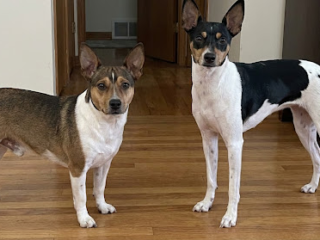
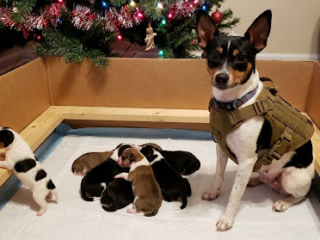
I was stalking a cutbank, moving so slowly I felt like the three rat terriers I left back home—Rocket, Bella, and Flower—when they’re on the scent of a squirrel. I saw him. A beautiful brown trout, shimmering like minted gold in the sunlight, rising to a tiny dry fly.
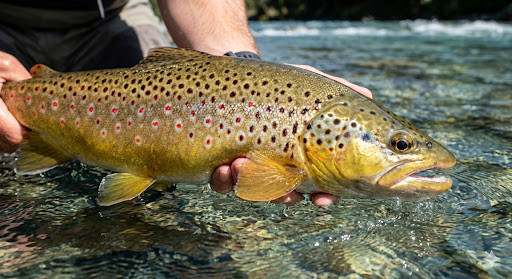
The take was subtle—almost a ghost of a movement—but I reacted instantly. I set the hook with a flick of the wrist, and the fight was on. The trout ran, leaping out of the water, its scales flashing like a neon sign against the blue sky. It was a dance of power and finesse. When I finally brought him to the net, I just stared. He was a magnificent specimen, radiating health and wild energy. I admired him for a heartbeat, thanked the river, and watched him slip back into the cold current.
That moment was the closing of a circle. I hadn’t just landed a fish; I had proven that the Driftless Rat could survive the big leagues.
Part VI: The Return Path
Leaving the South Island was bittersweet. I left a piece of my heart in those crystal-clear rivers and beneath those towering mountains. I realized that the South Island isn’t just a destination; it’s a mirror. It challenges you, it mocks your ego, and it forces you to grow.
I’m back in the flatlands of Fergus Falls for now, still managing the digital marketing and SEO strategies that pay the bills. But my internal compass is still calibrated to the South. I’m hunting for that remote opportunity that will let me move back home to the Driftless. I need to be there for my daughter. I need to show her what I know. I need to take her into the woods and show her the grocery store in the dirt.
I am not trying to be Kenny Salwey anymore. I am coming back as something else. I am coming back as Yankee Heath. I am coming back to be the King of the Creeks, the King of the Trout, and the King of the Driftless.
The Last River Rat set the standard. But the Driftless Rat is finally ready to report for duty. I’m coming home.